

Hoteliers who have changed the world: Prof. Hans B. Bauerfeind

In our Green Pearls® newsletters we write about hotels and destinations and their green initiatives. We have dedicated our latest series to the hoteliers who are committed to more sustainability in tourism and their day-to-day business and who continue to inspire us with their ideas.
Today our journey to the Thuringian Vogtland at the so-called Zeulenrodaer Lake leads us to Hans B. Bauerfeind, the founder of the Bio Seehotel Zeulenroda and the holiday village MANOAH - Häuser am See.
Friendliness is a must - but even more important is honest cordiality. The guest feels that he or she will be well looked after. This should be relaxed, friendly and down-to-earth, not forced.

From entrepreneur to hotelier
Hans B. Bauerfeind found his way back to his home town of Zeulenroda via the family business, Bauerfeind AG. The medical aid production company was moved to the west in 1949. After reunification, the company returned to its home in the Thuringian Vogtland, where the production facility of the well-known family business is still located today.
The entrepreneur also discovered the birthplace of his hotel at the beautiful Zeulenroda dam. An old, ailing concrete block still bears witness to a former FDGB (Free German Federation of Trade Unions) holiday home from GDR (German Democratic Republic) times. The two-part box-like building accommodated up to 1000 beds at that time. Bauerfeind lamented the decay of the ruin - this beautiful location should be enjoyed! And so, the vision of his own lakeside hotel began to take shape in his daydreams. He invested 29 million euros and a lot of hard work in the construction of the new hotel according to his ideas. It takes a lot of courage, entrepreneurial spirit, and passion to turn a concrete box into a multi-award winning organic hotel in only 15 years.
From conference hotel to family-friendly wellness hotel
A lot has happened since the hotel opened in 2001. For example, the hotel has been on the list of the top 10 best conference hotels since 2003 and in 2006 it became the first organic conference hotel. The focus on sustainability in all areas of the hotel quickly developed into a unique selling point. Since then, Bio Seehotel Zeulenroda has received numerous awards, such as the EU Ecolabel for outstanding commitment and EMAS certification. It was also the first German hotel to receive the GREEN BRAND Germany award. But Hans B. Bauerfeind is not resting on his laurels. He still has a lot to do and it is not about awards, but about the well-being of the guests.
Since the lifting of the drinking water restrictions on the dam, the Zeulenrodaer Lake has become a true holiday paradise, and beaches, hiking trails, and water sports facilities have been created. This paved the way to a family-friendly wellness hotel in a fantastic location. In 2016 the Panorama Spa was built on 1,600m² with a view of the beautiful nature of the dam. Today the Bio Seehotel Zeulenroda is still the perfect conference venue, but also a popular wellness oasis for families, couples, and active sportsmen.
More than organic: The strengthening of a region
The switch to purely organic products took place in 2005, but it was not an easy path to take. Around 6,500 products had to be converted, staff trained and processes adapted. But neither Hans B. Bauerfeind nor Marco Lange, today's hotel manager, would do anything different today. For them, cooperation with companies from the region is particularly important. Since 2019 the Bio Seehotel has been a certified partner of "Thüringer Tischkultur": a network of restaurateurs, hoteliers, direct marketers, traditional craftsmen from timber, glass, and ceramic production. The hotel works closely with many companies from the region. Organic cheese and beef are purchased from the Ökohof Helmsgrün. The farm was awarded the animal welfare prize for natural and humane husbandry. The Büttner dairy supplies the hotel with cheese made by hand according to traditional Thuringian recipes. Regional honey from orchard meadows is sourced from a Bioland apiary.
Bio is an internal attitude
Hans B. Bauerfeind is himself a connoisseur. He remembers times when he could talk for hours with Marco Lange, then the hotel's chef de cuisine, about various types of oysters and vegetables. At home with his children, he always enjoyed cooking. The vegetables were still grown by himself, animals were slaughtered by hand.
"Organic is an internal attitude", says Hans B. Bauerfeind. It's about living healthier, using less chemicals and rediscovering the true taste of food. Seasonality and regionality are important factors in the selection of organic food and the creation of dishes at his hotel. The focus is on traditional Thuringian cuisine. By founding his own organic butcher's shop and bakery, he also has the opportunity to decide even more freely what is put on the table, and can also respond more quickly and easily to customer wishes. However, organic does not stop with the selection of food. Eco-friendly paper, phosphate-free cleaning agents, organic bed linen are just a few of the important points in running an organic hotel. Organic has no limits, he says, and there is always room for improvement. Bauerfeind regularly brings the latest developments home with him from organic trade fairs.
MANOAH - Häuser am See (Houses on the lake)
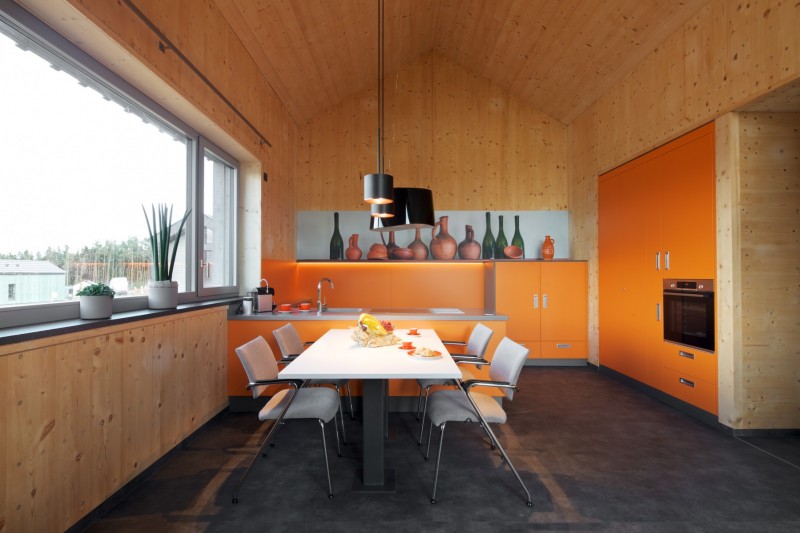
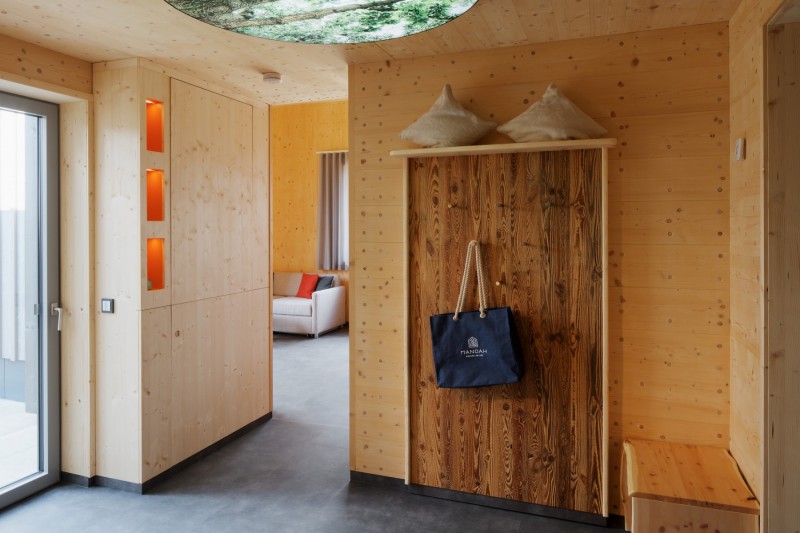
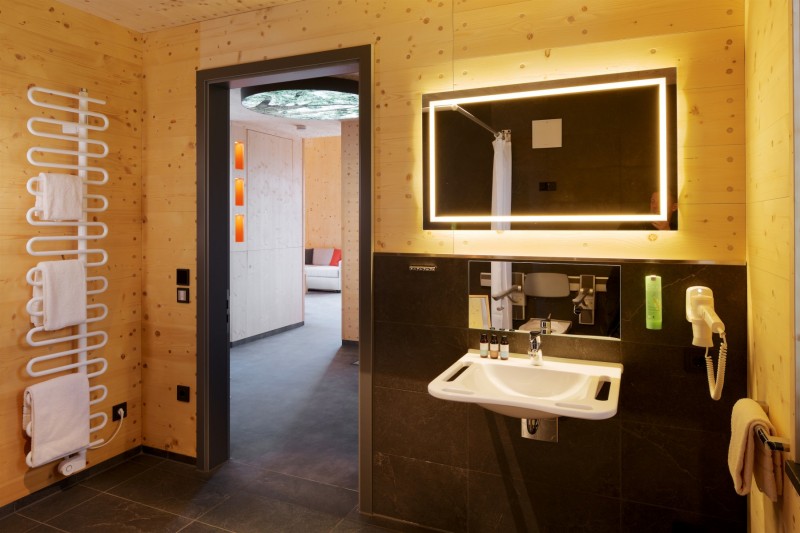
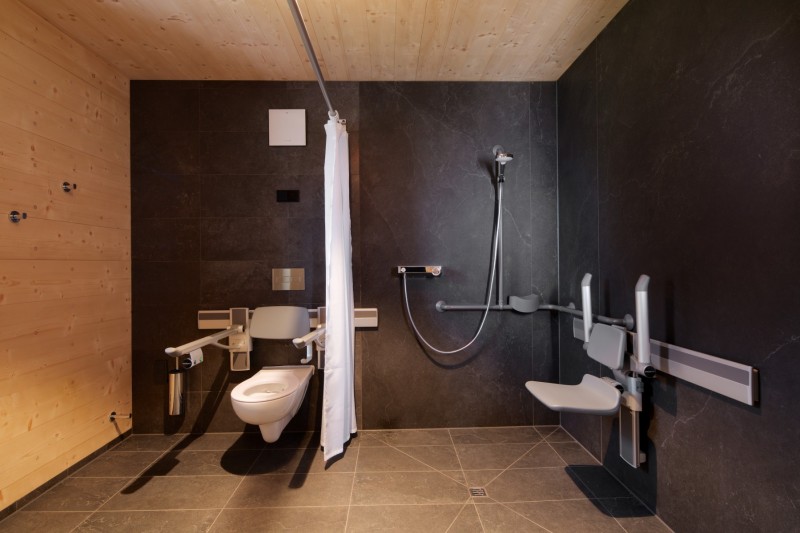
The latest project of Hans B. Bauerfeind and the hotel director Marco Lange is the holiday village "MANOAH". It is not only a showcase project for sustainable tourism but also a kind of lighthouse project for the Zeulenroda Lake region to further strengthen Thuringia as a tourist region. Manoah means "place of rest", "gift" or "present" in Hebrew and stands for the lifestyle of the holiday homes on the lake. The holiday village consists of 21 houses in a purist architectural style. The chalet-like solid wood cottages were built from high-quality natural materials. There are 3 types of accommodation from 60-80 m² for up to 8 people. There are also 6 barrier-free cottages. The holiday homes were built by the company Thoma from Austria according to the specially patented building system Holz100 and the so-called "moon wood" from sustainable forestry was used. The wood comes from trees felled in accordance with the forestry moon calendar. The trees are felled in winter when the moon is waning just before the new moon. Due to these conditions, it is said to be particularly stable, durable, fire-resistant, and resistant to pests. The walls were also connected by a plug-in system and with the help of wooden dowels. Glue, metal, poisonous chemicals, or wood preservatives were therefore avoided. These cottages made of solid wood are said to be particularly health-promoting and life-energy-giving.
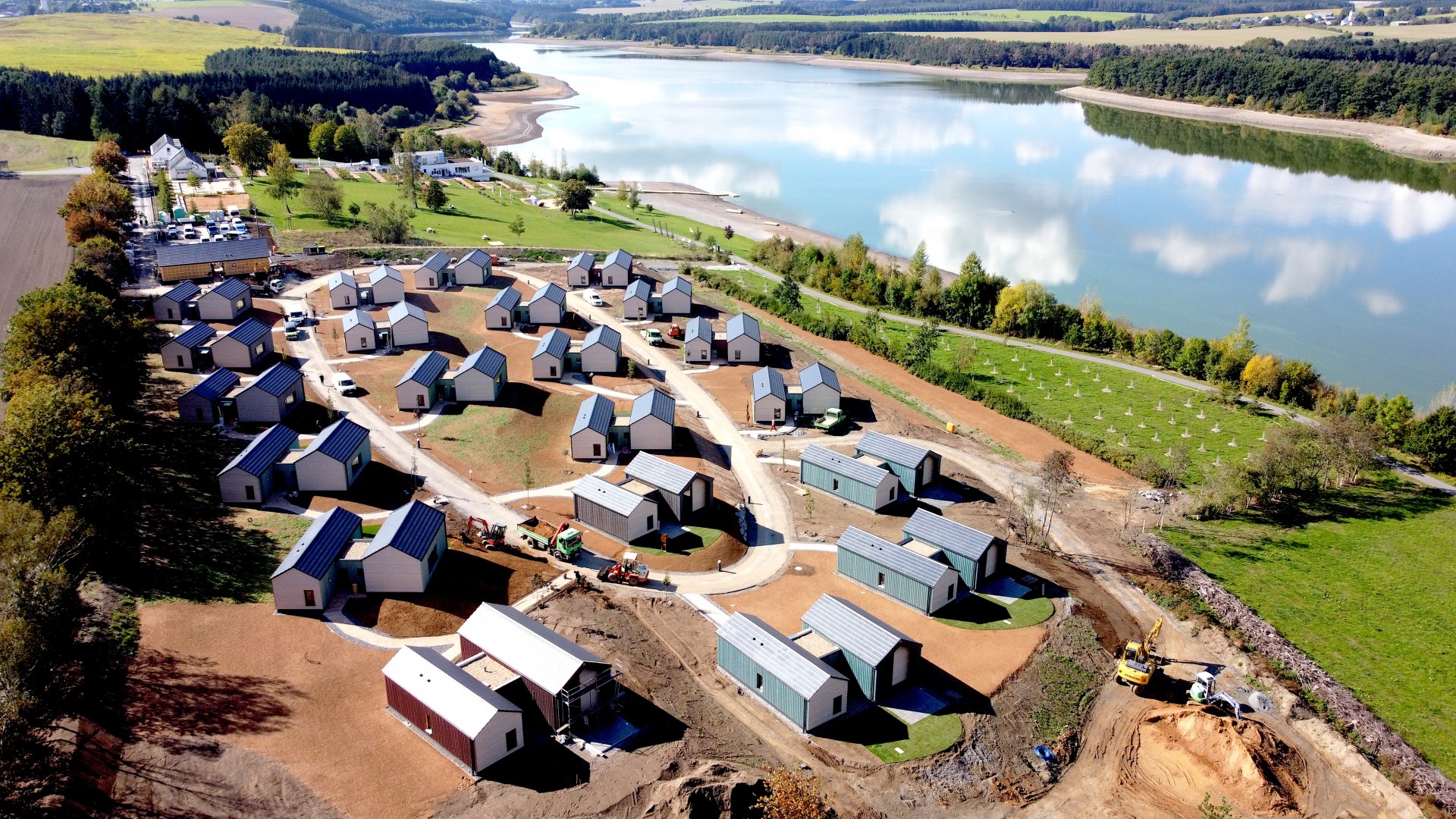
A lighthouse project for sustainable tourism
The holiday village was opened in October 2020 and offers its guests a fantastic getaway location. From the terraces of the houses, you have a view of the lake, and the surrounding woods invite you for long walks, hiking, and cycling. The holiday homes are self-catered and in the so-called MANOAH market guests can visit and find, in the future, everything their heart desires: freshly baked bread, rolls, barbecue packages, regional specialties, or picnic baskets. All organic and as plastic-free as possible. In addition, the beach house "Da Rosario", the patisserie Bergmann, or, of course, the Bio Seehotel can be used for culinary excursions. The holiday village is car-free and so instead of a carpark, in front of each holiday house a different "tree of the year" has been planted. This theme is also reflected in the decoration and design of each house. In the interior, natural materials such as slate, natural stone, and wood have been used as far as possible. Both in the construction and in the interior design, attention was paid to environmental friendliness and regionalism in all areas.
Hans B. Bauerfeind is a pioneer in ensuring that Zeulenroda has been a "state-approved resort" since 2019. The dam, which citizens affectionately refer to as the Zeulenroda Lake, is now a holiday paradise for low-impact, sustainable tourism.