

Sustainability in tourism: Are we on the right track?

Is the tourism industry truly moving in a better, more sustainable direction, or is it just making the same promises over and over again? Over the past few weeks, we’ve been discussing this question within the Green Pearls® network with our partner properties, from South Tyrol to the Baltic Sea and from Bavaria to Croatia.
From a niche topic to a general foundation
In the hospitality industry, sustainability has evolved from a niche topic to an integral part of business strategy. Major hotel groups have set ambitious climate goals, and many companies have signed the Glasgow Declaration for Climate Action in Tourism. However, there is a clear gap between these voluntary commitments and their implementation. More than three-quarters of the signatories did not publish their climate action plans by the agreed-upon deadline. Furthermore, major airlines and cruise lines—two key sectors of the tourism industry—have barely been represented thus far.
Furthermore, in light of economic uncertainties, practices that conserve resources are losing priority once again. According to a Deloitte survey, only 45 percent of European hotel managers and investors cited environmental and social responsibility as one of the most important issues going forward in 2024 - down from 61 percent the previous year. Political and economic momentum is waning, even as the sense of urgency continues to grow.
A interim assesment from the Green Pearls Network
This shift is known as the “mind-behavior gap.” Awareness of the need for greater sustainability is widespread today, as are numerous initiatives—many of which are privately driven. However, structural integration is still too often lacking. Stefan Bode, owner of the SCHWARZWALD PANORAMA hotel, agrees. While the industry continues to evolve and environmental protection has long since established itself as an important quality feature in tourism, both hoteliers consider it crucial to integrate individual measures into a holistic approach: one characterized by long-term thinking, regional value creation, transparent standards, and a willingness to continuously refine existing structures.


Value-Behavior Gap: What guests actually book
The 2024 Sustainability Monitor from the German Research Association for Vacation and Travel reveals a clear discrepancy between consumer expectations and behavior. While 49 percent of Germans prefer eco-friendly vacations — a seven-percentage-point increase since 2019 — and 61 percent support social responsibility, environmental protection often takes a backseat in booking decisions. In 2023, environmental protection was the deciding factor in only three percent of vacations, and a supplementary factor in 17 percent. While trips with sustainability labels were booked more frequently than in 2019, this trend has declined slightly since 2021.
The picture is somewhat more positive internationally. According to the latest Travel & Sustainability Report from Booking.com, which surveyed more than 32,500 travelers in 35 markets, 85 percent consider resource-efficient travel to be important or very important. Younger travelers express the strongest commitment to sustainability; however, they are less likely than older generations to translate this commitment into concrete actions.
Ana Grzincic, the hotel manager at Hotel Korinjak, has also noticed the discrepancy between attitudes and behavior. Although commitment to sustainability is growing, the tourism industry continues to struggle with the consequences of overconsumption and intense price pressure.
True sustainability requires structural change and the realization that responsible travel may not always be the cheapest option.
Hotel Korinjak

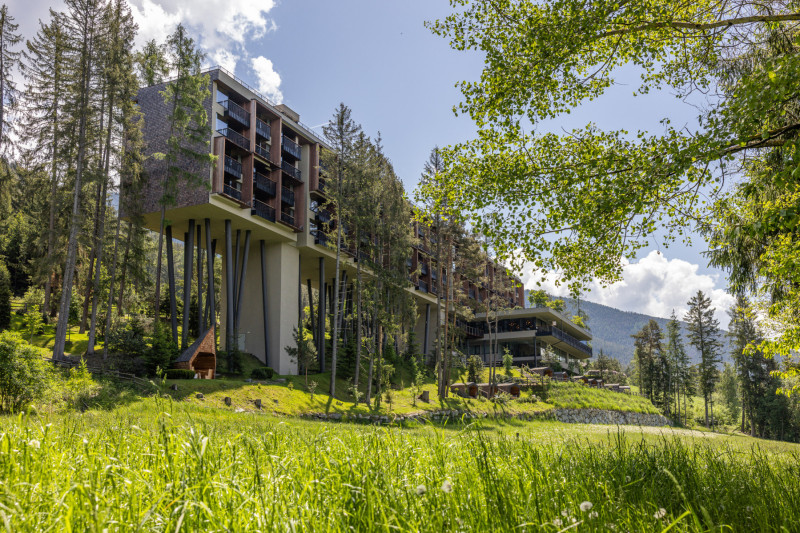
Alexandra Huber, owner of the tree hotel My Arbor, already sees tangible progress thanks to certifications, resource-efficient concepts, and supportive policy frameworks. Still, reconciling environmental responsibility with high expectations for comfort, service, and profitability in the luxury hotel sector remains a challenge. Therefore, for her, the key is not to search for the perfect solution, but rather to find a credible balance. She emphasizes that true sustainability begins when contradictions are not concealed but communicated transparently and addressed consistently.

Greenwashing remains an issue
The discrepancy between claims and actions is precisely what creates room for greenwashing, a term that actually originated in the hotel industry: In 1986, environmental activist Jay Westerveld coined the term after finding signs at a resort in Fiji urging guests to reuse towels while new concrete bungalows were being built along the coast. Nearly forty years later, some measures still seem like a distraction from the actual sources of emissions, such as when a cruise ship with thousands of passengers eliminates plastic straws while its large diesel engines continue to run below deck.
Ursula Wagner, the managing director of Naturresort Gerbehof, sums up the problem: "Guests today can hardly tell what sustainability promises are genuine." This is where the increasing regulation of environmental and climate promises comes into play. Based on new EU guidelines, such claims will be subject to stricter scrutiny in Germany moving forward. General terms such as "environmentally friendly" or "sustainable," as well as carbon-neutrality claims, must be clearly defined and substantiated in a verifiable manner. Sustainability labels must also not be misleading.


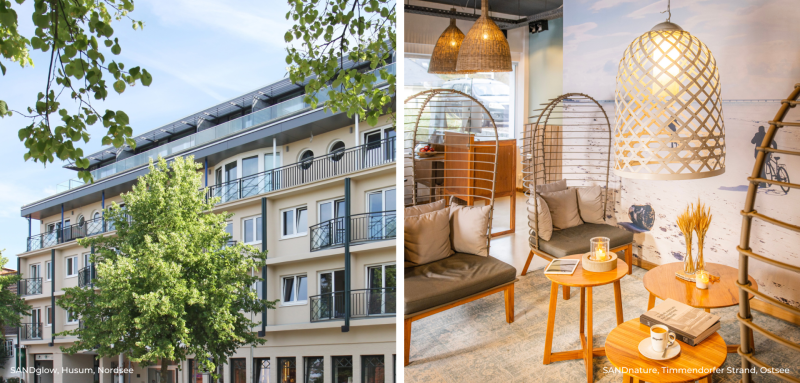
Marion Muller, of the SANDcollection, which operates two hotels — SANDglow on the North Sea and SANDnature on the Baltic Sea — views this shift as generally positive. She notes that audits and certifications create transparency and help curb greenwashing. However, she cautions against defining responsible tourism solely through formal credentials. While certifications are important guides, they could further increase the already high administrative burden and do not make a company’s attitude or long-term commitment measurable. Therefore, it is crucial for businesses to take responsibility beyond regulatory requirements and drive sustainability based on their own convictions. Muller also views it as a positive development that more and more destinations are understanding their role beyond traditional destination marketing. These destinations are working with tourism service providers to ensure the sustainable expansion of infrastructure and offerings. Funding programs at the European level could support this transformation further and strengthen cooperation.



The role of the destination
Caroline Pescoll, the Sustainability Officer at ADLER Spa Resorts & Lodges, notes that tourism dynamics vary greatly depending on the destination. While some regions that view their natural environment as a valuable resource have already integrated environmentally conscious practices into their tourism strategy, others initially focus on expanding infrastructure. Many established destinations are now managing their tourism more consciously, placing greater emphasis on quality than on mere growth.
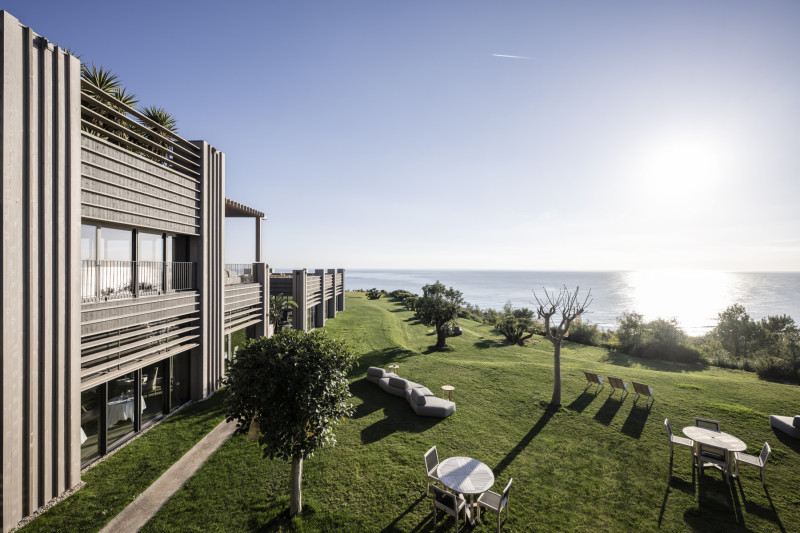
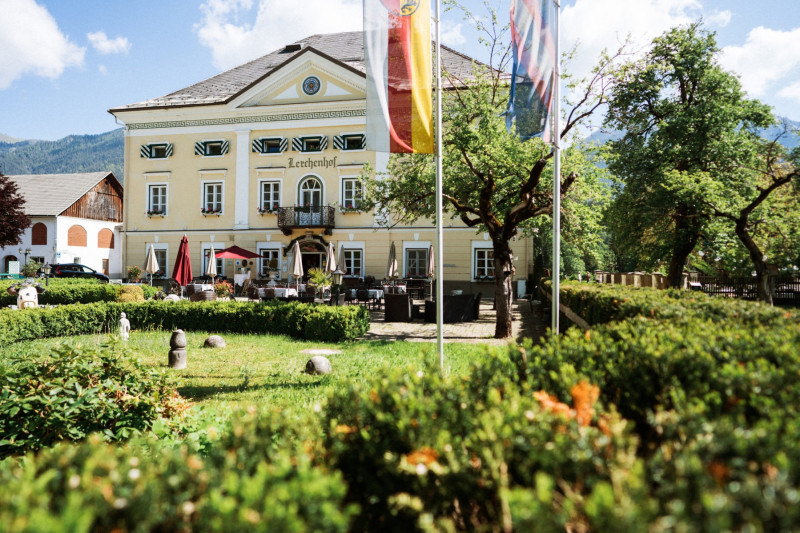
Johannes Steinwender, the host of Hotel Schloss Lerchenhof, believes that the development of these destinations is generally on the right track. However, he feels that it is not consistent enough yet.
Sustainability is increasingly becoming a topic of discussion; nevertheless, in practice, revenue growth and short-term cost optimization often continue to take precedence over truly circular economy-oriented approaches that strengthen regions in the long term.
Johannes Steinwender, Host from Hotel Schloss Lerchenhof
Construction projects and grocery shopping in particular often do not benefit the region economically, even though local solutions could create more stable structures in the long term.
Marco Spiss of the Summit Lodges Pfunds makes a similar argument. He advocates linking value creation more consistently with regionally rooted experiences and local culture, as well as making balanced use of existing resources. Environmentally sustainable tourism, he argues, will only be successful if economic success and regional responsibility are understood not as opposites, but as a shared goal. Manfred Rinner, junior manager of the APIPURA hotel rinner, is therefore actively involved beyond his own business as a group representative for tourism in the South Tyrol Bioland Association, as a member of the HGV’s provincial committee, and in the Sustainability & Innovation working groups, actively promoting the concept of resource conservation in South Tyrol.
An honest interim assessment
So, are we on the right track? Yes, but not consistently enough. At least, that is the unanimous conclusion of the Green Pearls® hoteliers. We’re heading in the right direction, but not quickly enough. Too many initiatives remain fragmented, too many decisions are made last minute, and too many promises go unfulfilled. Meanwhile, external pressure is easing, yet the need continues to grow.
The Green Pearls® network's key insight is therefore as simple as it is uncomfortable. Sustainability will only take hold when it is prioritized economically, structurally, and operationally. In the long term, the industry should shift its focus toward quality over quantity. Crucially, travel must bring economic benefits while respecting nature, resources, and the quality of life of the local population. Whether or not tourism contributes to the solution is not determined by individual measures, but rather by whether or not companies and destinations consistently consider their environmental, social, and economic impacts when making decisions and take responsibility for them.
Our sources:
- Deloitte: Cost and sustainability fatigue stifle consumers’ efforts to adopt more sustainable lifestyles
- Hilton: Our Progress – Travel with purpose
- Travel & Sustainability Report – Booking.com
- Umweltbundesamt: Studie Nachhaltigkeit bei Urlaubsreisen
- Forschungsgemeinschaft Urlaub und Reisen e.V.: Abschlussbericht Nachhaltigkeit bei Urlaubsreisen
- plan a glossary: Greenwashing