

New Hotel Star Requirements for 2025 to 2030 – Are they undermining Sustainability Efforts?
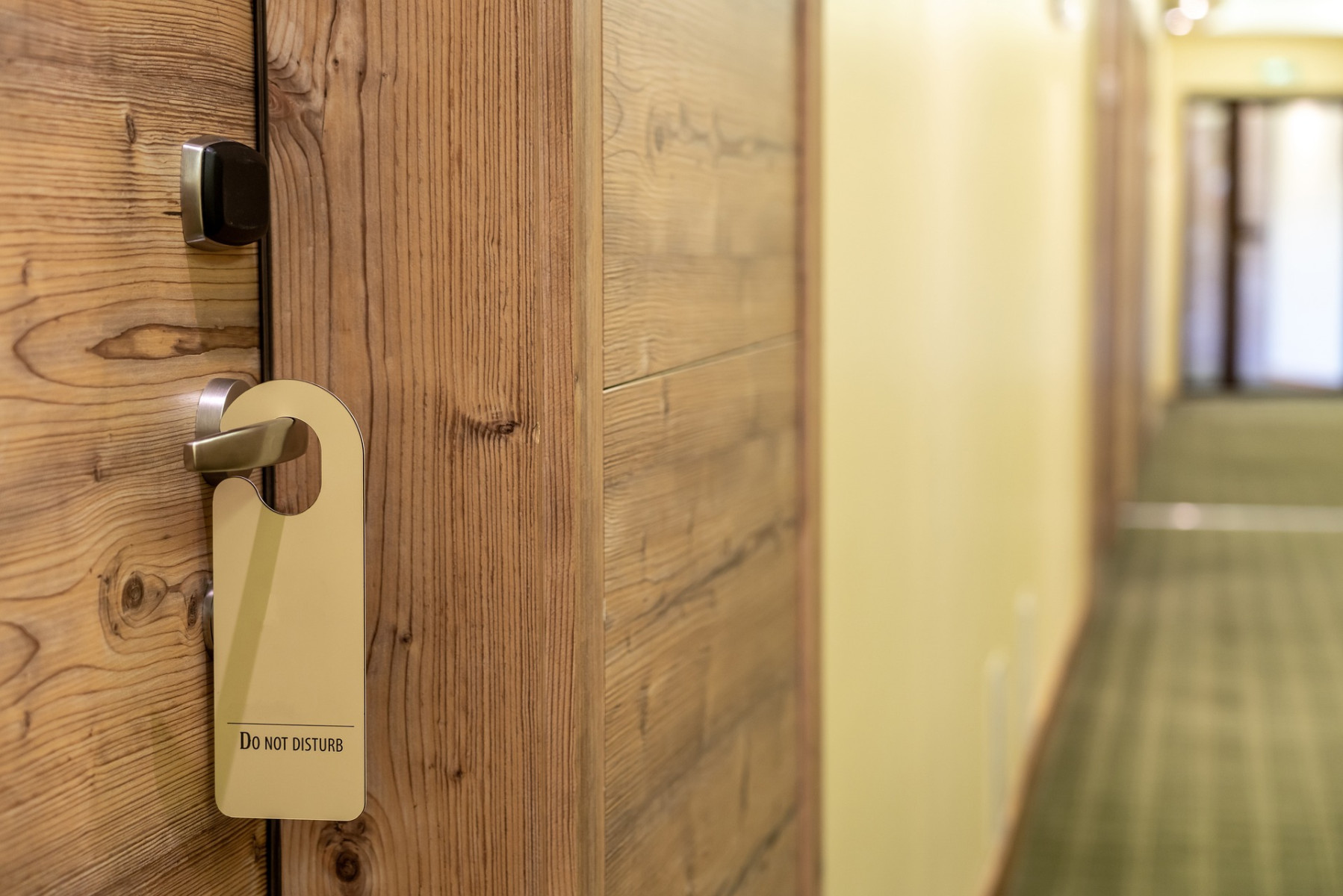
To qualify as a three-, four- or five-star hotel, hotels must meet an extensive list of requirements. The latest version (2025 to 2030) is already available. However, leading hoteliers believe that much of it runs counter to sustainability. They accuse the German Hotel and Restaurant Association (DEHOGA) and the European Hotel Stars Union of enforcing wasteful behavior instead of rewarding ecological measures. Is that true? Green PearlsⓇ has requested clarification and taken a stand.
New 2025 Hotel Stars Catalog Put to the Test
The 21 member countries of the European Hotelstars Union revise the star criteria every five years. The current provisional criteria catalog is available in the test phase. The number of stars a hotel receives is determined by a combination of the fulfillment of minimum criteria and points achieved.
Those hoping that the new criteria catalog with its 247 criteria would provide a clear signal for sustainability will be disappointed. As can be seen from the catalog, quality, comfort, and convenience remain the top priorities, while sustainable initiatives are rewarded with points in the "nice-to-have" category.
Here are a few examples from the current Hotelsterne catalog:
- From the first hotel star, daily room cleaning is (still) a MUST
- E-charging stations are not mandatory, but they are rewarded with 10 points
- A bicycle garage is worth 3 points (new)
- A "significant proportion" of regional products at breakfast earns 5 points (new)
- A bellboy and a doorman are each worth 15 points
- A bathrobe and slippers must be provided in the room at a five-star hotel.
- A hairdryer is mandatory from three stars
- Mattresses 200 cm wide or 220 cm long are worth 15 points
- Certification with a sustainability label (such as GreenSign) is worth 20 points
- Measuring your carbon footprint is worth 10 points
DEHOGA: "Hotel Stars are no Substitute for a Sustainability Label"
The green communication agency Green PearlsⓇ inquired with the German Hotel and Restaurant Association (DEHOGA) as to why sustainability is not given a significantly higher rating in the context of the climate crisis. Markus Luthe, Managing Director of DEHOGA Deutsche Hotelklassifizierung GmbH, provided the following response:
Hotel classification is to be understood as a quality initiative that focuses on the creation of comfort and quality categories. It must therefore be clearly distinguished from specialized sustainability labels that focus on other aspects.

According to Luthe, by revising its criteria, the German Hotel Classification "takes into account the increased awareness of sustainability, but does not aim to replace sustainability labels.” This means that those who prioritize sustainability should rely on sustainability labels, while those who prioritize quality and comfort should pay attention to the star category.
But: Travelers want Comfort AND Sustainability
Green PearlsⓇ views this approach as an opportunity missed, as sustainability and comfort should not be seen as separate entities. This is supported by the latest study on travel trends for 2024, for which the online travel agency Booking.com surveyed 27,000 travelers from 33 countries. The survey revealed that over half (53%) of travelers are looking for accommodation that combines comfort with innovative sustainability.

"The Hotel Industry Must Embrace Sustainability to Remain Fit for the Future."
Green PearlsⓇ has been promoting sustainability in tourism for more than eleven years and considers the current Star Catalog "insufficient in terms of sustainability". Stefany Seipp, founder explains: “In order to take sustainable development in tourism into account, it is essential to adapt the star classification.”
The Green PearlsⓇ website does not display stars when searching for sustainable hotels. "The younger generation in particular is not looking for stars when it comes to accommodation," says Seipp. "Instead, the personal history of hotels and resorts, authenticity, and real sustainable initiatives are becoming increasingly important."
Stars vs. Sustainability, or: Is the Daily Room Cleaning Justifiable?
Many sustainability-oriented hoteliers face a dilemma: If they want to keep their stars, they must do things that run counter to their environmental efforts.
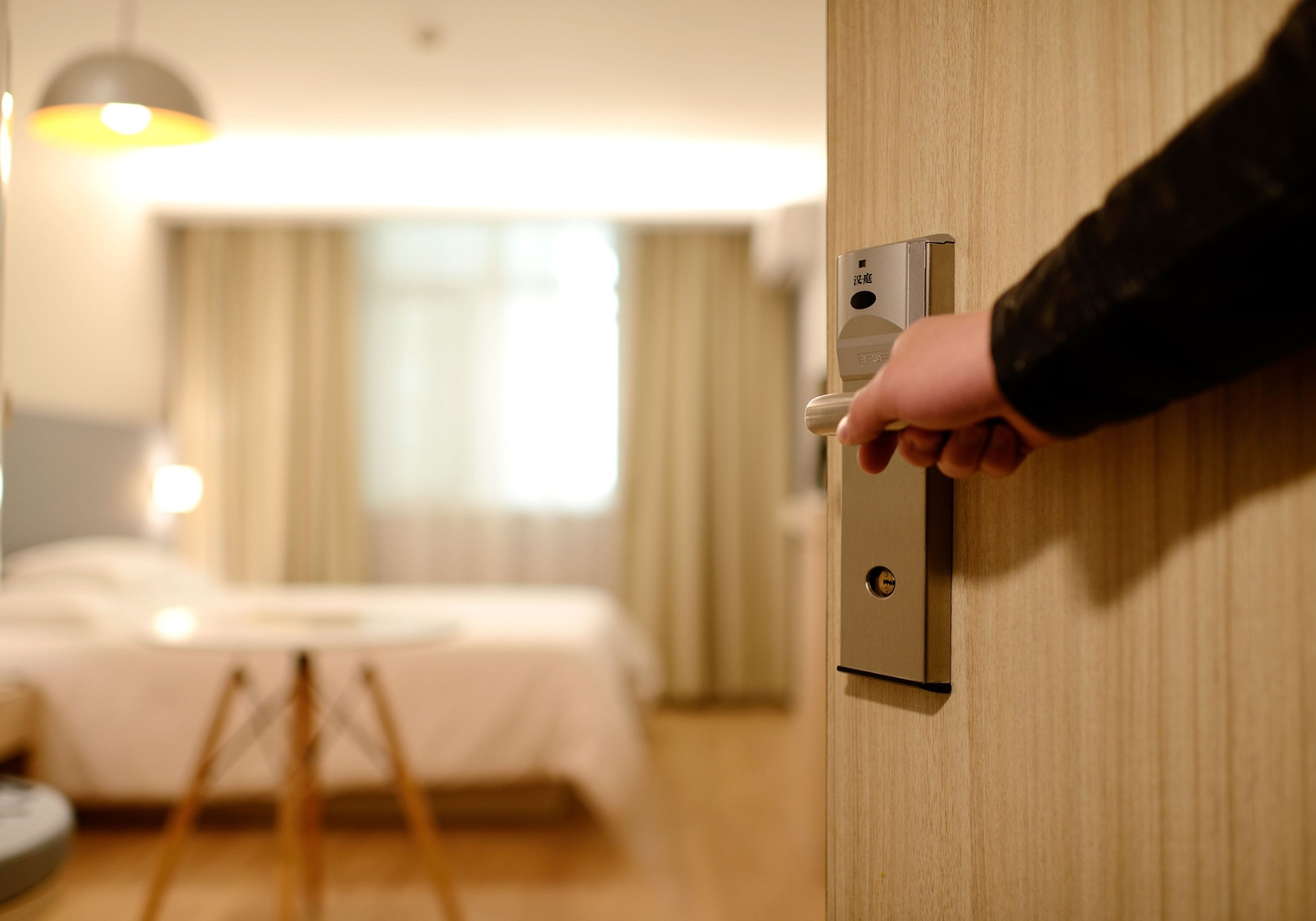
One of the key areas of contention between sustainable hotels and the star classification system is the frequency of room cleaning. As previously stated, the latest criteria catalog continues to require daily room cleaning from the first star onwards.
Many hoteliers view this as both unnecessary and ecologically unacceptable. The amount of electricity, water, and chemical detergents used for daily room cleaning is considerable, particularly given the scale of operations at hotels. For instance, in 2019, when the Berlin-based A&O chain with 39 hotels switched to allowing guests to opt out of daily cleaning, the initiative saved 10,000 cleanings in just two months. A&O reports that this resulted in the following savings: 75,000 liters of water, 708 kWh of electricity, and 20,000 plastic waste bags.
Opt-Out vs. Opt-In for Room Cleaning
The Hotel Luise in Erlangen, Germany, wanted to go one step further and not only give guests the option to opt out of daily cleaning but also switch to an opt-in option. This means that the rooms will only be cleaned (for free) if the guests explicitly ask for it to be done. However, DEHOGA rejects this. If the Green PearlsⓇ partner hotel only cleaned the rooms on request, it would have no stars at all, rather than the current three stars.
The Hotelstars Union considers Daily Room Cleaning Essential
The DEHOGA CEO informed Green PearlsⓇ that they had discussed the opt-out and opt-in solution for room cleaning with their European colleagues in the Hotelstars Union and had collectively decided against the opt-in solution. "So that daily room cleaning remains the standard for hotel classification, as it contributes to a high level of cleanliness, safety, and hygiene." The Hotelstars Union considers daily cleaning to be a "core service offering" and a key differentiator from private room rentals.
Ben Förtsch, owner of the Hotel Luise, disagrees: "It is unclear to me why this level of hygiene, safety, and cleanliness is not provided if the guest requests cleaning instead of rejecting it." For him, the attitude of the Hotelstars Union demonstrates that "sustainability is not understood as a standard, but as a nice-to-have."
Warum diese Hygiene, Sicherheit und Sauberkeit nicht gegeben seien, wenn der Gast aktiv eine Reinigung wünscht, anstatt sie aktiv ablehnen zu müssen […] erschließt sich mir persönlich nicht.



Using Hotel Star's "Mandatory Criteria" for a Good Cause
Given that there is only the aforementioned "opt-out" option for guests, sustainable accommodations, such as Green PearlsⓇ hotels, must prioritize communication. "We deliberately make our guests aware of the option of not having their rooms cleaned," reports the four-star nature resort Gerbehof on Lake Constance. On the website, in the guest folders in the rooms, and at check-in, guests are informed that they can choose not to have their rooms cleaned and that the hotel will donate 4 euros to the "Kinder im Sternenland" project.
"If waiving room cleaning were a matter of course, we wouldn't be able to express the donation project in this way," says Naturresort Gerbehof. However, they also support giving more weight to sustainability in the star classification. Owner Ursula Wagner takes a clear stance on this: "It is unacceptable that there is an environmental audit and sustainability awards but when it comes to the star classification every initiative is blocked."


"Unfortunately, as a five-star hotel, we can not always choose the most sustainable solution."

Lukas Obendorfer, from the Birkenhof***** Spa & Genussresort in Upper Palatinate, also believes that sustainability is "too far behind" when it comes to star classification. As the hotel has five stars (it also has a restaurant with two Michelin stars), it is, unfortunately, not always possible for the team to choose the most sustainable solution. The hotelier is particularly frustrated by the necessity of providing guests with so many products in their rooms. For instance, bath slippers contribute to a significant amount of plastic waste. Natural materials are mostly not optimal for the wellness area. "It is more practical for guests to bring their own slippers," says Obendorfer during an interview with Green Pearls®.
Obendorfer sees the awarding of points for a sustainability label such as GreenSign, which is anchored in the criteria catalog, as positive. At the same time, he criticizes the fact that a hotel like the Birkenhof, which has reached level 5 in GreenSign, receives the same number of points as a hotel at level 3. There is a need for improvement here.
Lifestylehotel SAND: “DEHOGA hat eine starre Vereinsführung”
Marion Muller from the lifestyle hotel SAND in Timmendorfer Strand on the Baltic Sea says: "The DEHOGA standards for sustainability (...) are due to a relatively rigid association management. Although or rather because they are a four-star hotel, they are taking alternative paths in their hotel and also communicate their green attitude via Green PearlsⓇ.



Tips for Eco-Conscious Travelers
Hotel stars can still not be seen as an indicator of environmentally and socially responsible action. Travelers therefore have no choice but to pay attention to transparent and trustworthy sustainability seals and take action themselves.
Green PearlsⓇ has compiled 15 tips for sustainable travel in 2024 on the Green Travel Blog. These include:
- Eco-friendly travel (no domestic or short-haul flights)
- Sustainable local transportation
- Booking a sustainable accommodation
- Use of the opt-out option at the hotel (e.g., from room cleaning) and responsible use of resources such as water
- Interaction with the culture and language of the country
- Respect for people, nature, and animals
- CO2 offsetting
- Lightweight luggage and reduction of waste

As it turns out, the Hotelstars Union has failed to set a clear signal for sustainability in its current set of criteria. According to Green PearlsⓇ, this is essential for the future viability of the travel market. And yet the focus on sustainability has so far only been an "alternative path". This is by no means a contradiction to quality, but it is not compatible with the (current) star classification. The Green PearlsⓇ partner hotels prove that environmentally friendly initiatives do not have to stand in the way of comfort, hygiene, and luxury.
It remains to be seen whether travelers and hoteliers will completely turn their backs on hotel stars in the future, or whether the Hotel Stars Union will change its focus for the good of the planet.