

Industry transformation in hospitality: When lone warriors reach the limits of the system

As we demonstrated in our last newsletter, fair working conditions in the hotel and hospitality industry are not a cost factor, but rather an investment with a measurable return. Companies that promote health, provide planning security, and offer development opportunities gain loyal employees and achieve economic stability.
In recent years, many hotels have invested heavily in improving working conditions. They pay above the standard rate, offer comprehensive benefits, and foster a culture of appreciation. The good news? This change is real and measurable. The challenge? Even the most committed companies are reaching structural limits they cannot overcome alone. Without a political framework that enables modern employment practices, changing the industry will be an impossible task.
Green Pearls® sustainable hotels show what can be achieved operationally. However, their experiences also reveal systemic barriers blocking widespread change. A look at key areas of tension and how to resolve them.
The cost trap: When fairness becomes an economic risk
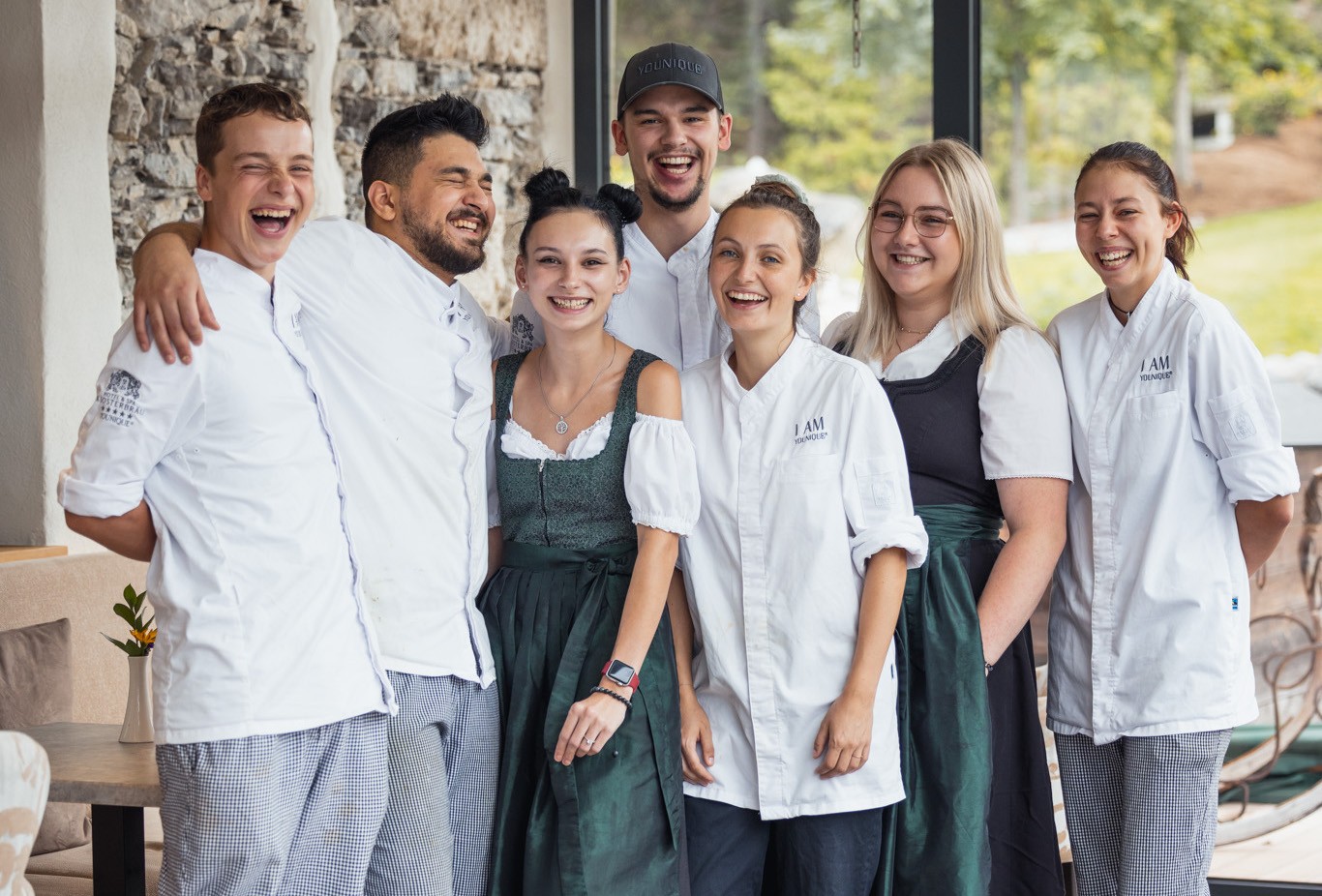
The Hotel Klosterbräu in Seefeld offers a 16-page list of benefits, including individually tailored work schedules, accommodations, meals, discounted leisure activities, and comprehensive training opportunities. Assistant manager and head of human resources, Coleen Aigner, is convinced that no other industry offers as many additional benefits on top of salary as the hotel industry does.
However, hotels that pay above the standard rate and offer additional benefits face economic burdens due to high non-wage labor costs. The total cost of gross wages and employer contributions makes fairness a luxury that smaller businesses can often afford only by drastically raising their prices, which puts them at a competitive disadvantage. While committed employers bear disproportionate costs, businesses with minimum standards benefit economically.
What is needed: A reform of non-wage labor costs in the hospitality industry could reduce employer contributions for companies that prove they pay above the standard rate or offer respectful, certified working conditions. Tax incentives for occupational healthcare, further training, and benefits that exceed legal standards would provide additional flexibility. Reducing VAT for sustainable and socially certified businesses could encourage competition based on fairness.
The image dilemma: When success stories go under
Meanwhile, noticeable changes to working conditions in the hotel industry have been observed by the Green City Hotel Vauban. Most companies have long recognised that their employees are their most valuable asset. However, negative portrayals of hotel industry employees in the media are still commonplace, despite being outdated in many respects. This is particularly noticeable when it comes to filling vacancies. Who wants to work three different shifts, with lots of overtime, for a temporary salary — even on weekends and public holidays? This often-portrayed image, however, no longer corresponds to reality in modern businesses.
Changing the focus or perspective on the industry and asking, “What are we creating?” instead of “What are we (not) getting?” is, in our view, the key to improving the external perception of the industry.
SANDcollection

The adults-only wellness hotel My Arbor in South Tyrol, the Naturresort Gerbehof in Germany, and other Green Pearls® hotels confirm: The criticism of working conditions reflects an outdated image. In particular, sustainable hotels pay close attention to the well-being of their employees; sometimes, this commitment is even written into the statutes of the individual establishments. Christian Schmidt, the managing director of SANDcollection, also believes that the industry is better than its reputation suggests. However, it still needs to communicate this more effectively. SANDcollection is actively involved in DEHOGA committees and the Chamber of Industry and Commerce's tourism committee. The company organizes industry events and conducts intensive public relations work. Nevertheless, positive examples are overlooked while negative headlines dominate public perception. Consequently, young people are deciding against training in the hotel industry, and even career changers are hesitant.
What is needed: An industry-wide employer branding campaign led by key stakeholders in the hotel industry that goes beyond image advertising and provides concrete examples of modern employers. A publicly accessible, search engine-optimized database of exemplary companies could increase visibility. Lastly, a seal of quality for appreciative working conditions that is prominently displayed on review portals would provide transparent guidance.
Outdated structures: Curricula that lag behind reality
The image of the hotel industry also influences how people perceive training. Christian Schmidt from SANDcollection makes this clear: The modernization of teaching and training plans is long overdue. Current IHK curricula barely cover digitalization, sustainable business management, or mental health. Rigid training structures that require full-time attendance do not align with the realities of life for many young people or career changers, nor are they helpful in hotel practice.

What is needed: Integrating current topics, such as digital tools, sustainability, guest communication on social media, mental health, and work-life balance, into IHK curricula would modernize training. Modularization could open up new target groups by allowing career changers with professional experience to participate. Recognizing part-time training for individuals with caregiving responsibilities would provide flexibility. An internship initiative with quality standards could provide a realistic view of the modern hotel industry.
Training opportunities in urban and rural areas
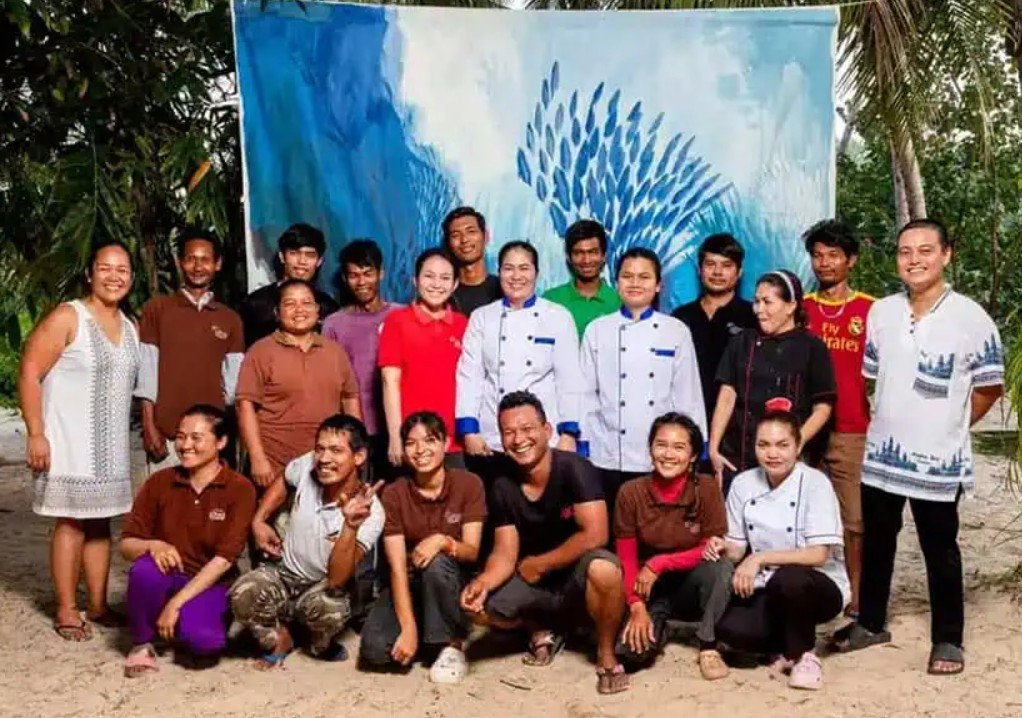
From an international perspective, the Canvas & Orchids Retreat in Cambodia illustrates what needs to change urgently in the rural hospitality sector: transparent overtime regulations, reliable access to training opportunities outside larger cities, and recognizing local employees as qualified professionals instead of seasonal workers. The retreat aims to set an example by demonstrating that a sustainable hotel must also be a fair place to work, upholding high internal standards. This challenge is not unique to Cambodia. Tourist regions away from urban centers often lack the infrastructure necessary for professional development.
What is needed: Mobile training opportunities in rural tourism regions through regional Chamber of Commerce and Industry branches or digital learning platforms with face-to-face components would provide easier access to qualifications. Allowing easier labor migration for skilled hospitality workers from third countries and accelerating the recognition of foreign qualifications could alleviate the labor shortage in peripheral regions.
The planning paradox: When flexibility meets bureaucracy
The requirement to record working hours, which took effect in 2023, caught many businesses by surprise. Fortunately, many Green Pearls® hotels were able to respond in time. Hotel STURM uses modern time recording and digital tools. Gut Sonnenhausen has implemented a fully digital time recording system. However, the majority of the hotel industry lacked clear implementation guidelines, practical guidance, and affordable standard tools. Small businesses in particular faced the challenge of implementing GDPR-compliant digital solutions without the ability to hire IT experts. The result: uncertainty, expensive individual solutions, and a patchwork of different systems.
What is needed: Practical guidelines for legally compliant work time recording, especially for shift work in the hotel and restaurant industries, would provide valuable guidance. Support programs for digitizing HR processes in small and medium-sized enterprises could reduce the financial burden. Legally compliant standard tools, ideally open-source software or subsidized industry solutions, would establish uniform standards and shorten training periods.
From exception to norm: A question of perspective
Several hotels have identified the core of the problem: the hotel industry needs more planning security, a better work-life balance, and genuine recognition of its employees' daily achievements. The Hotel Das Rübezahl, OLM Nature Escape, ADLER Spa Resort SICILIA, and ADLER Lodge RITTEN all agree that appreciative working conditions and an employee-centered corporate culture should be the norm, not the exception, across the industry. Only when the people who sustain the industry are heard, supported, and respected can the hotel industry's future be shaped successfully and responsibly.
Our industry, the hotel business, is a wonderful and varied profession in which you can bring joy to guests and constantly learn new things yourself.
Coleen Aigner
Executive Assistant and Head of HR at Hotel Klosterbräu
For this conviction to become a reality for the entire industry, political conditions must be established that promote fairness. Associations must be vocal and uncompromising, acting as the industry's authentic voice. And society must be prepared to reevaluate hospitality professions.
The pioneers have set the example. Now, it is up to the industry as a whole—together with politicians, associations, and society—to follow suit. As Alexander Thurm, the managing director of Hotel Das Rübezahl, promises: "With us, you are not a cog in the system, but part of a vision." This vision needs support to become a reality.